Bergen for Americans
The President of the United States has, once again, described Norway as a shit house. We are not going to argue. We live here, it rains, and we know what a beer costs.
What we will say is this. If you are coming to Norway anyway — and people keep doing it, review notwithstanding — there is a good chance you come in through Bergen. It is the gateway to the fjords, the second city, and the first thing most visitors touch. That makes Bergen the door knob of Norway’s shit house. It is always wet. It is a bit slippery. And once you have hold of it, the place behind it turns out to be far better than advertised.
This is a guide to the door knob. Everything in it is true, and every number in it comes from the other pages on this site or from the Sources at the bottom.
- Roof: leaks (normal annual rainfall)
- 2 495 mm
- Occupants
- 295 000
- Heating: normal annual temperature
- 8.4 °C
- Driveway: airport to city centre
- 30 min
The inspection report, in full

Let us start with what the inspector got right, because he is not entirely wrong.
It rains. Bergen’s normal annual rainfall is 2,495 millimetres, and it rains on somewhere between 171 and 234 days a year depending which year you pick. There is no dry season. There is a slightly less wet one, and locals talk about it fondly.
It is expensive. A beer in a bar is 139 to 179 kroner, which is 12 to 15 euros, and the dollar does not improve it much. A cappuccino is 69. The big dinner is not what empties your wallet; it is the small, repeated things.
People are quiet. Nobody will talk to you on the bus. This is not hostility. It is the local idea of good manners, and it stops the moment you ask for directions.
It is dark in winter. On 21 December the sun is up from 09:44 to 15:29. That is five hours and forty-five minutes, and a fair bit of it is spent behind a cloud.
Verdict on the inspection
Four out of four. A rainy, expensive, quiet, dark house. Now read the rest of the report, which is the part the inspector did not stay for.
Deficiencies in the inspection

The tap water is free, and it is excellent. Restaurants do not charge for it, and asking for it is not considered cheap. At least one menu in town prints “Springvann er gratis” — tap water is free — and charges 10 kroner only if you want it hot.
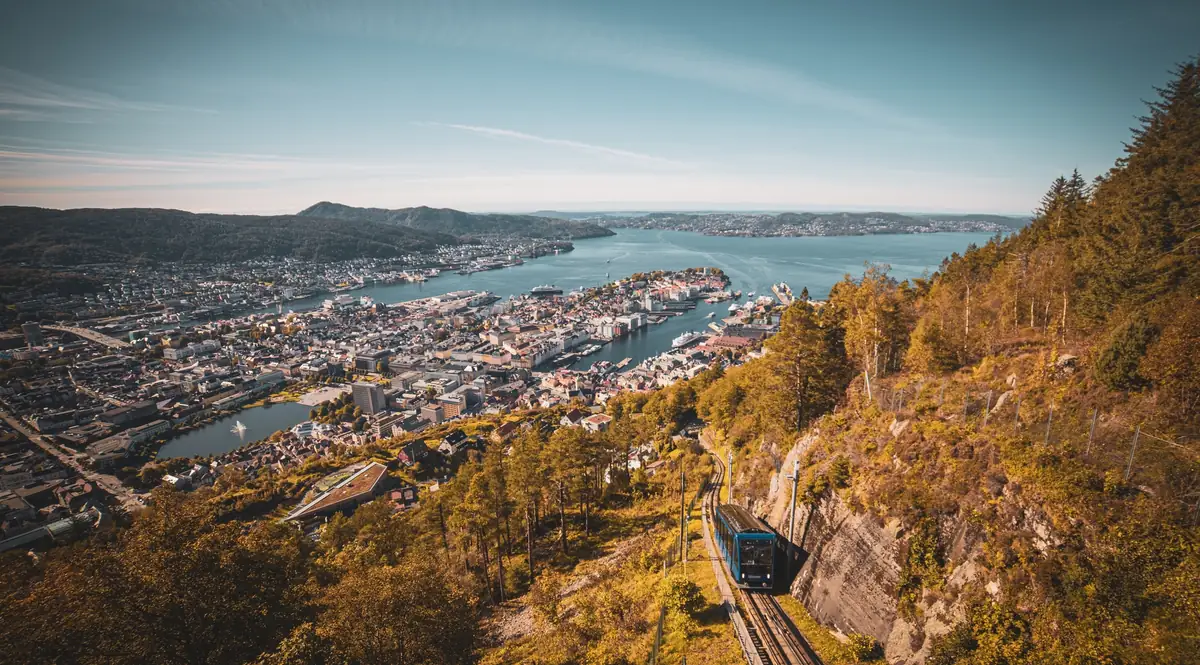
The city has a mountain in the middle of it with a funicular up the side. Fløibanen takes eight minutes from the city centre to the top of Fløyen, and the walk back down is 45 minutes on a made path. In June you can do that walk at ten in the evening in full daylight, because on 21 June the sun rises at 04:09 and sets at 23:11.
The harbour front, Bryggen, is a UNESCO World Heritage site. The fjords start at the end of the street. And the whole centre is small enough that you will not need the car you were worried about parking.
The dark has a season too, and the city leans into it. From mid-November there is a Christmas market by the lake and an entire miniature town built out of gingerbread. More on both below.
How to grab the door knob
The front door is Bergen Airport Flesland, about 30 minutes from the city centre. You have three ways in: the light rail, which the locals call Bybanen, the airport bus, or a taxi.
The light rail is the one to use. If you buy a Bergen Card it is included, from the airport all the way into town, along with Skyss buses and light rail lines 1 and 2. The card costs 400 kroner for 24 hours, 500 for 48 and 600 for 72, and it also covers entry or a discount at most of the museums on this page.
If you have hired a car anyway, read our parking guide before you arrive. Street parking is free on Sundays almost everywhere, and the simplest move on any other day is a city garage with a daily maximum of 260 to 300 kroner. Pay at the machine before you leave; from 28 August 2026 the garages add 15 percent to automatic card payments if you do not.
A thing about the door knob itself
Every visitor arrives braced for the rain and still forgets a hat. Bring a proper waterproof jacket with a hood, not an umbrella. Umbrellas do not survive the wind off the harbour, and the locals can tell a visitor by the inside-out one in the bin.
The hallway
The hallway is where a house makes its first impression, and Bergen’s is a good one. Most of it is within a fifteen-minute walk.
Bryggen is the row of wooden merchant houses along the harbour, the old Hanseatic wharf. The Hanseatic Museum’s main building at Finnegården has been closed since 2018 for restoration, due to run until early 2027, so the museum currently operates from Schøtstuene at Øvregaten 50, where there is a medieval ruin under a glass floor. Bryggens Museum, built over the excavated foundations of the medieval harbour, is open daily from 10:00 to 17:00 for 170 kroner.
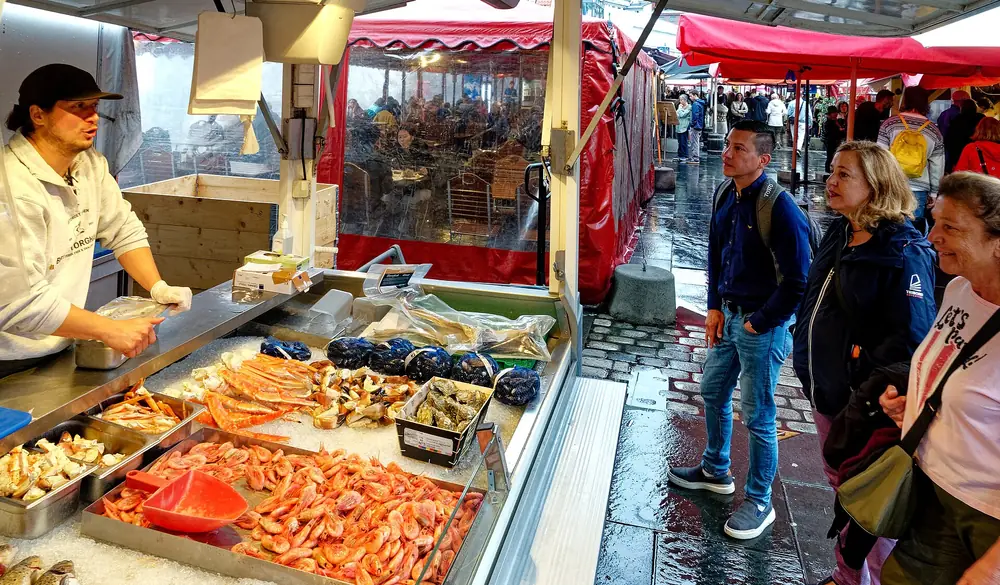
The fish market is right there, and you will go, so go with your eyes open. It is a tourist market at tourist prices. Our restaurant guide says plainly which stalls are worth it and where people who live here actually eat.
Then the two mountains. Fløibanen, the funicular, runs from 08:00 to midnight. Off season, from October to March, an adult return is 145 kroner; in high season it is 200 to 220. Ulriken643 is the cable car to the highest of the seven mountains. An adult return is 435 kroner, about 37 euros, and from October to March it closes on Mondays.
The plumbing works
For a shit house, the plumbing is remarkable.
The water, as noted, is free and clean and comes out of the tap. The toilets flush. The streets are safe to walk at three in the morning, which is about when you will be walking them, because that is when the bars shut.
The one pipe that is deliberately narrow is the one carrying alcohol. Shops stop selling beer at 20:00 on weekdays and 18:00 on Saturdays, and cannot sell it at all on Sundays or public holidays. Wine and spirits come only from Vinmonopolet, the state monopoly. The central branch at Valkendorfsgaten 6 opens 10:00 to 18:00 on weekdays and 10:00 to 16:00 on Saturdays, and is closed on Sundays.
What this means in practice
If you want a bottle of wine for Sunday evening, you buy it on Saturday before four. There is no workaround, no corner shop that bends the rule, and no amount of explaining that you are American that changes it.
Restaurants and bars keep serving. They just stop serving spirits between 03:00 and 13:00.
House rules
Every house has them. These are the ones visitors break most.
- Do not tip to be polite. Tips are taxable income here, and staff are on a proper wage. Round up if the meal was good. Leave nothing if it was not. Neither is rude, and nobody is going to chase you out.
- The kitchen closes before the bar does. Often by an hour or more. Turning up at 22:45 expecting dinner is the most common avoidable mistake in the city.
- Book a weekend evening. Do not bother on a Tuesday. Bergen is a small city and the pressure is seasonal, not constant.
- Cards work. Cash is a curiosity. The street parking machines take Visa and Mastercard, the garages read your plate, and your phone will do most of the rest.
- Electric cars pay full price to park. That surprises people who were told Norway is an EV paradise. It is, but not at the meter any more.
- Sunday is quiet by design. Street parking is free, the shops are mostly shut, and the city expects you to go up a mountain.
Heating and lighting
The heating is weak and the lighting is on a strange timer, and both are worth understanding before you pick a date.
The normal annual temperature is 8.4 degrees Celsius, which is about 47 Fahrenheit. July rarely feels like a holiday in the sense you may be used to. What the summer has instead is light: just over nineteen hours of it on the longest day, and the few hours in between never get past deep twilight. Concerts at the fortress finish in daylight. People eat outside at hours that would be absurd further south.
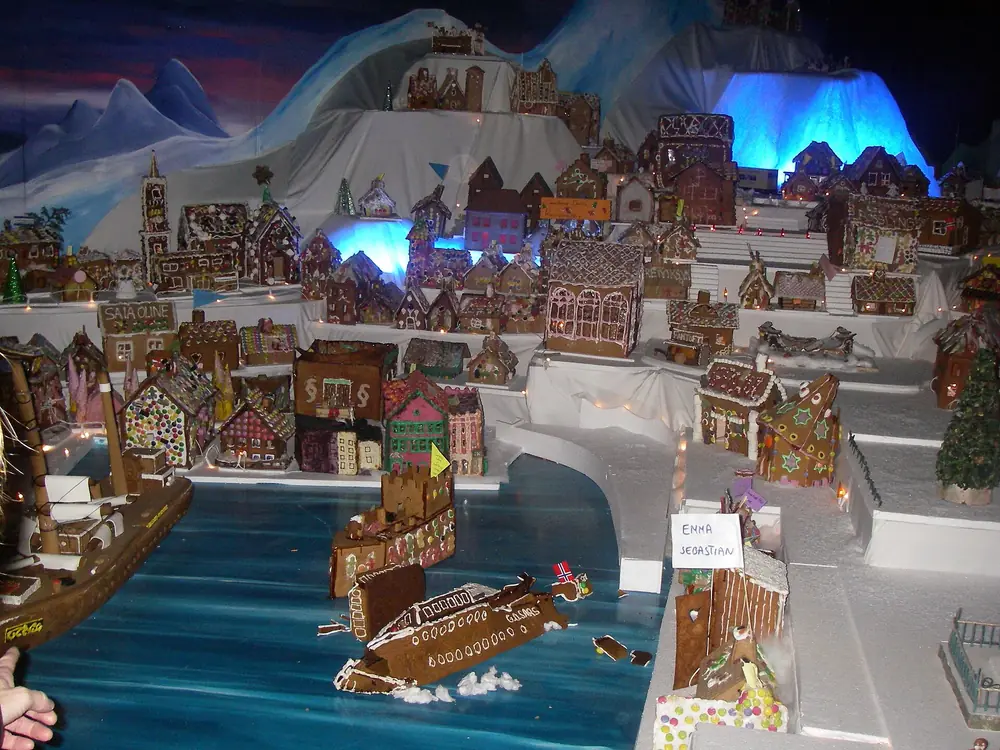
Winter is the reverse, and the city compensates. Pepperkakebyen, the Gingerbread Town, runs from 14 November 2026 to 10 January 2027 at Kong Oscars gate 24–26. It is a whole miniature city built out of gingerbread by schools, families and businesses, and adults pay 199 kroner. The Christmas market runs from 20 November to 22 December on Festplassen, the square by the lake, with over 90 stalls, a Ferris wheel and a carousel.
If you want the house at full volume, come in the first week of June, when three festivals overlap and the evenings barely get dark. Our what’s on page has the dates.
When the roof is leaking
It will be. This is the rainy-day plan, and it is a good one.
KODE is four buildings of art near the lake, and one 200-kroner ticket covers all of them. Under 18s are free. From mid-September the hours are Wednesday to Friday 11:00 to 18:00 and weekends 11:00 to 16:00. The Aquarium at Nordnes is open daily from 10:00 to 18:00 and is the obvious choice with children. Håkonshallen, the 13th-century royal hall at the fortress, is 120 kroner and open daily from 10:00 to 16:00, though it closes on a lot of individual dates for events.
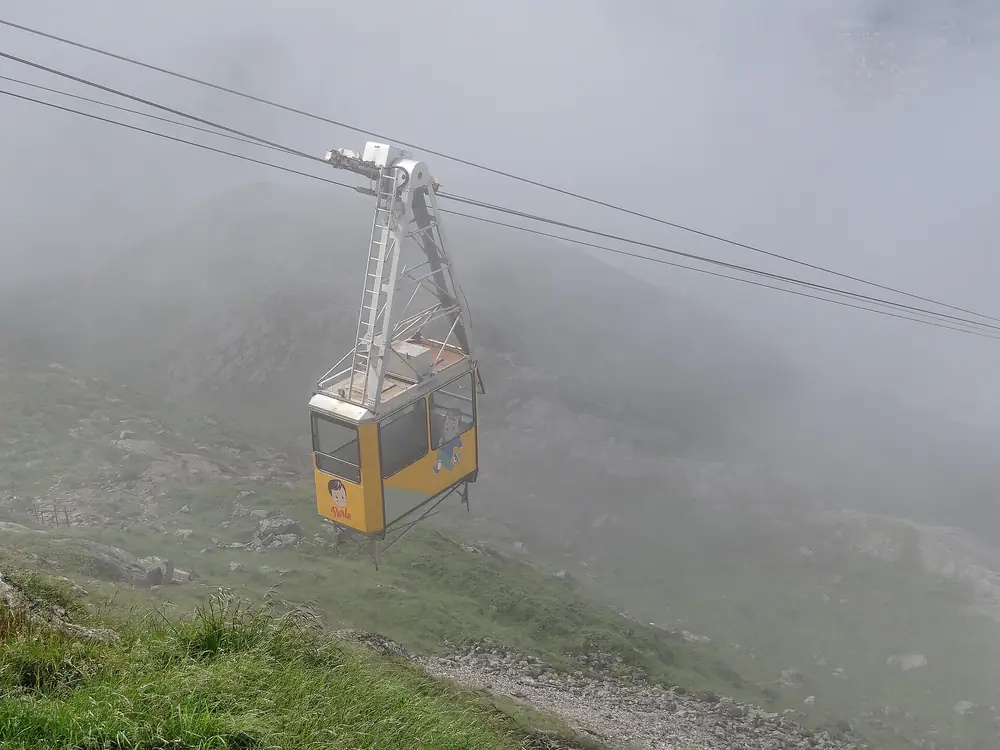
And the mountains work in the rain too. Fog on Ulriken is its own experience, as the picture above suggests, and nobody has ever regretted the walk down from Fløyen in a decent jacket.
If you’d rather be shown around
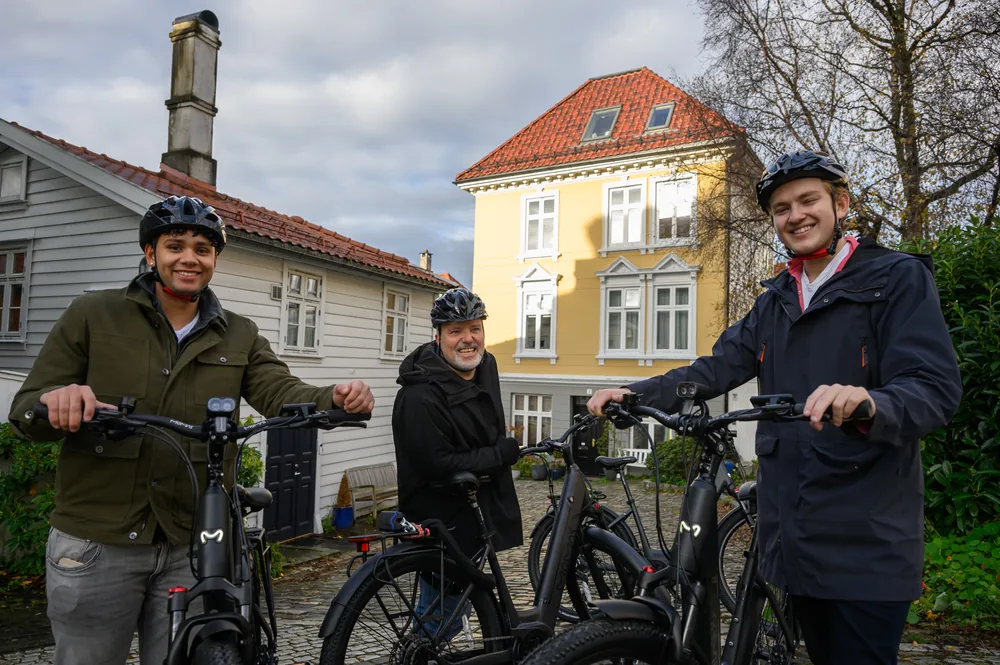
A small local company, Discover Bergen, runs guided tours in small groups: a quad from the cobblestones to the viewpoints, an e-bike through the wooden-house alleys with a stop for a cinnamon bun, a RIB out to the coves, or a walk through Nordnes after dark on a tour of ghosts, witches and prostitutes. Most tours take one to two hours and a place starts at 799 kroner.
Our verdict
The door knob, assessed
The house is wet, dear and dark for a third of the year, and the review is fair as far as it goes. But the water is free, the air is clean, the streets are safe, the mountains are in the middle of town, and the people will help you the moment you ask. We would rate the door knob highly. We would also bring a jacket.
A diplomatic note
This page is a joke. The rain is not. If you are reading it from the White House, you are very welcome in Bergen, and the funicular runs until midnight.
Questions Americans actually ask
Is Bergen safe?
Painfully. The practical risk is slipping on wet cobbles, and the solution is shoes with a grip. Walking home at three in the morning is normal.
Do they speak English?
Better than you would like. Menus, museum sites and the orchestra’s programme are published in English, and anyone under seventy will switch the moment you open your mouth.
Can I pay in dollars?
You can try. Visa and Mastercard work almost everywhere, including the street parking machines, and your phone wallet will do most of the rest. Carry a little cash for the one place that surprises you, and expect that place to be a toilet.
How much should I tip?
Nothing is required. Tips are taxed as income and staff are properly paid. Round up for a good meal, and don’t for a bad one; neither is rude. We do not print a percentage because no official source publishes one.
Do I need a car?
Not for Bergen itself. The centre is a fifteen-minute walk end to end, the light rail runs from the airport, and the Bergen Card covers it. If you hire one for the fjords, read the parking guide and put it in a garage.
When is the weather good?
There is no dry season. The best light is June, the best atmosphere is late November and December, and the best rainy-day plan is above. Pack for rain in every month, and be pleasantly surprised.
More of Bergen in English
We also have a guide to where to stay in Bergen, by neighbourhood. It is in Norwegian, but the map in your head will work in any language.
Sources
The rainfall, temperature and daylight figures, the museum and lift prices and the Christmas dates are the ones on our What’s on in Bergen page. The prices of beer and coffee, the tipping and alcohol rules and the closing times are from Best restaurants in Bergen. The parking prices, card rules and the garage surcharge are from Parking in Bergen. Each of those pages lists the operator’s own page every figure was read from, and the date.
Read for this page on 26 October 2026:
- visitBergen – Airport transport — the 30 minutes from Flesland, the three ways in, and the Bergen Card covering the light rail from the airport.
- visitBergen – Bergen Card — card prices and what it covers.
- Discover Bergen — tour prices and durations, with the company’s own pages listed there.
- Hotell i Bergen — the fifteen-minute walk from Bryggen to Grieghallen.